In online retail, a product photo is the closest thing a shopper gets to holding your product in their hands. No fitting room, no in-store lighting, no chance to turn the item over and check it from every angle — just a photo, a few seconds, and a decision to buy or scroll past. That single fact is why ecommerce photo editing services have quietly become one of the most important line items in a modern online store’s budget, right alongside advertising and web development.
This guide breaks down what these services actually include, why they matter more in 2026 than ever before, and how to choose the right photo editing company or image editing company for your brand — whether you’re a solo Shopify seller or a growing Amazon or Etsy business based in the US or Europe.
What Are Ecommerce Photo Editing Services?
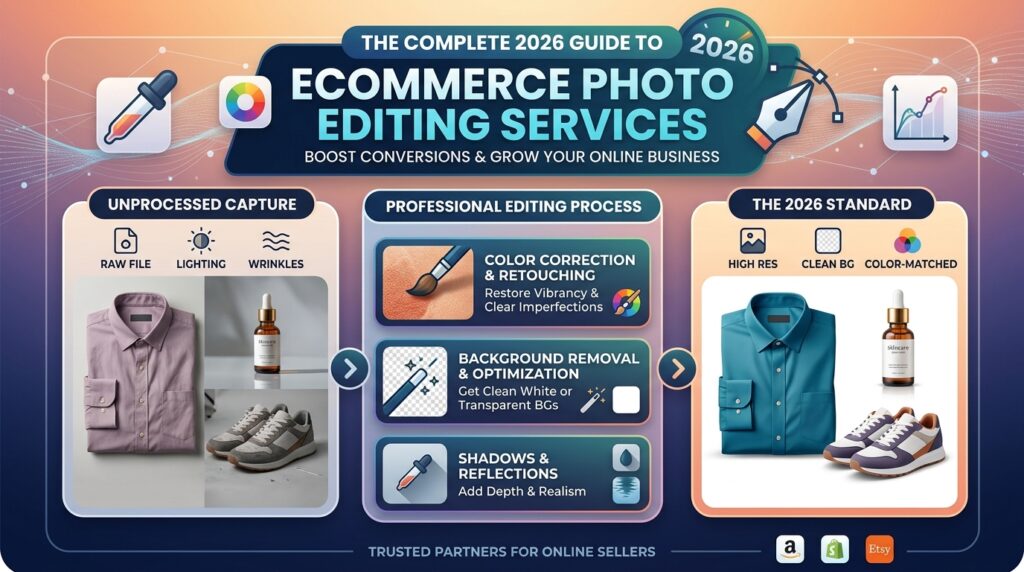
Ecommerce photo editing services (sometimes called ecommerce image editing services) cover the post-production work that turns a raw product photo into a polished, sales-ready image. Depending on the provider, this typically includes:
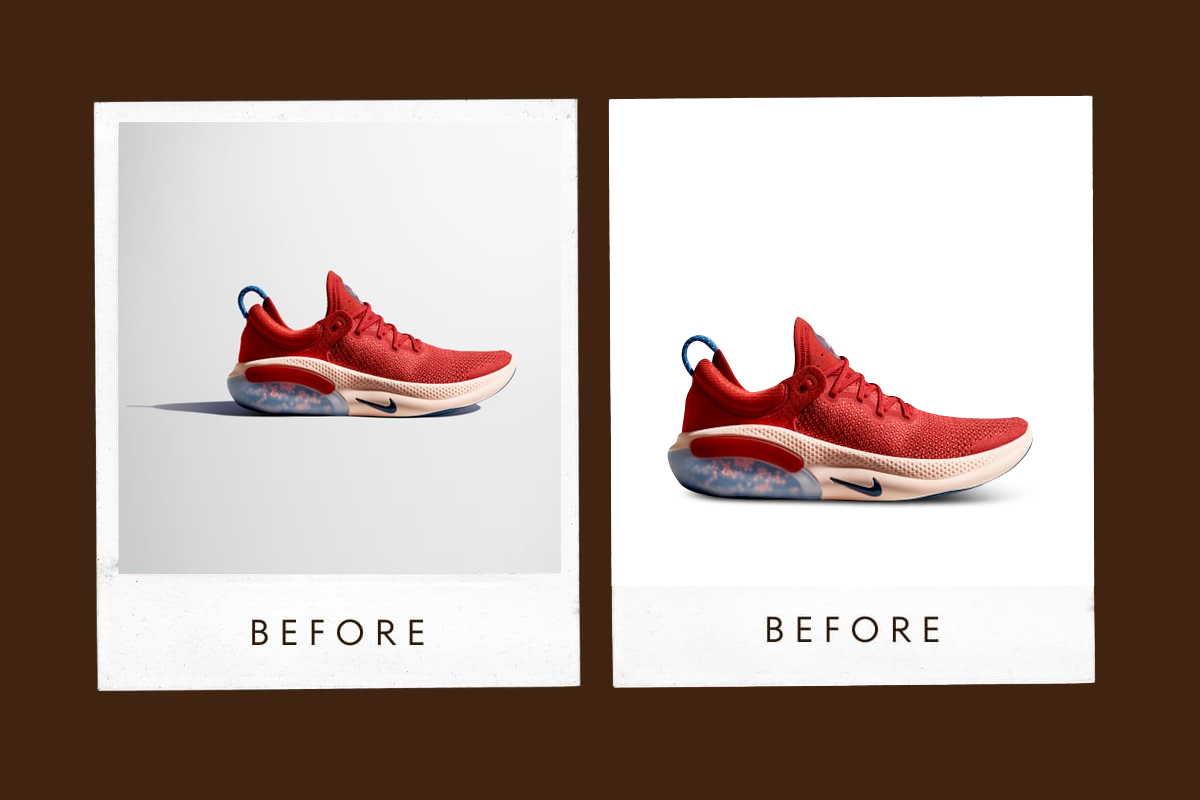
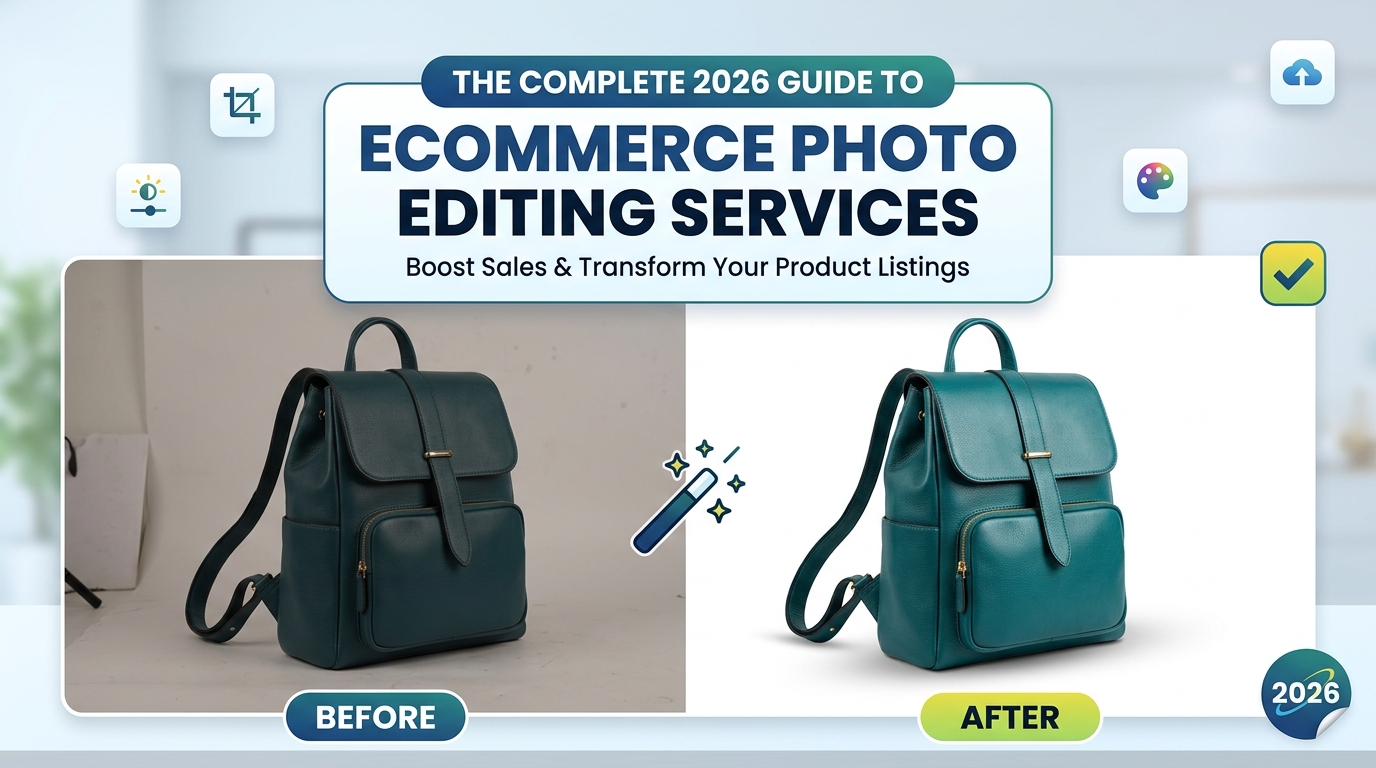
- Background removal and replacement (pure white, transparent, or lifestyle backgrounds)
- Color correction and color matching across a full product line
- Cropping and resizing to marketplace-specific dimensions (Amazon, Walmart, Etsy, Shopify, etc.)
- Dust, scratch, and blemish removal
- Drop shadow and reflection creation
- Ghost mannequin and invisible mannequin effects for apparel
- Skin and jewelry retouching
- Batch editing for large product catalogs
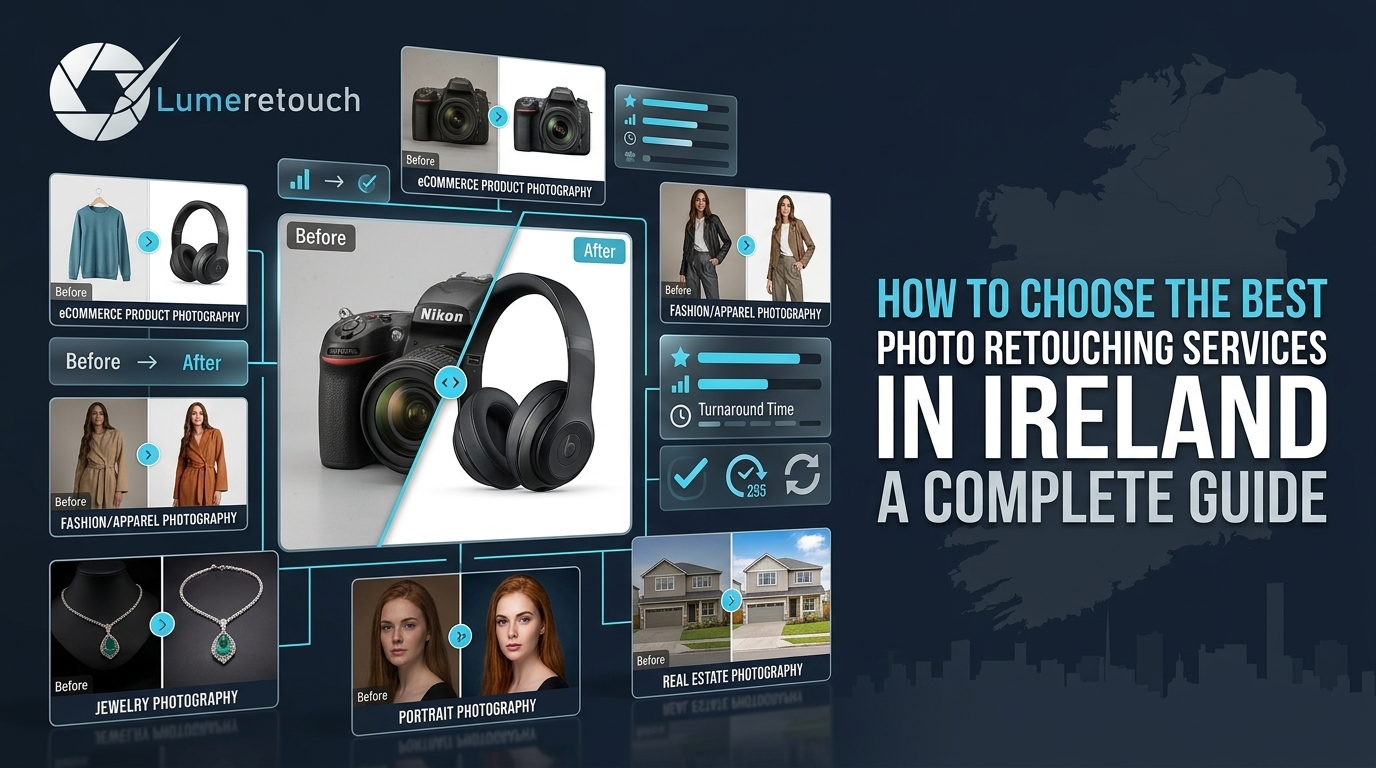
Retail photography studios in both the US and UK have pointed out that the priority in ecommerce editing isn’t dramatic transformation — it’s accuracy, consistency, and conversion. Buyers today compare products across browser tabs, zoom in on details, and screenshot images before purchasing, so anything that misrepresents the product tends to increase returns rather than sales.
Ecommerce Photo Retouching: Where the Real Difference Shows
Ecommerce photo retouching is the more detailed, hands-on layer of editing the work that happens after the basic cleanup is done. It’s the difference between a product photo that looks “edited” and one that looks right.
Good retouching work in 2026 tends to follow a few principles:
- Color accuracy over color perfection. A red hoodie should look the same shade in every size and angle. A blue mug shouldn’t shift tone between the front and side shots. This kind of consistency directly reduces return rates and improves review scores, since customers are far more likely to complain about a mismatched color than almost anything else in a listing.
- Texture preservation. Fabric weave, leather grain, and skin pores should stay visible. Over-smoothing a product photo makes it look artificial and can quietly damage buyer trust — something quality-focused retouching studios flag as one of the most common mistakes in high-volume editing.
- Careful, controlled retouching around difficult materials. Hair, fur, lace, mesh, glass, and reflective metal are the hardest elements to edit cleanly, and they usually require manual, frame-by-frame refinement rather than one-click automated tools.
If you’re outsourcing this work, ask any prospective vendor how they handle color consistency across a full product set — not just a single hero image. That one question tends to separate serious photo editing companies from high-volume, low-quality mills.
Drop Shadow Service: Small Detail, Big Impact on Conversions
A drop shadow service might sound like a minor finishing touch, but it plays an outsized role in how “real” a product looks on a page. Products placed on a pure white or transparent background without any shadow tend to look like they’re floating flat, artificial, and slightly untrustworthy at a glance.
There are generally three types of drop shadows used in ecommerce photography:
- Natural shadow – mimics how the product would actually cast a shadow under real lighting; best for a photorealistic, premium feel.
- Floating shadow – a soft, blurred shadow set slightly below the product; commonly used for tech products, cosmetics, and minimalist brand aesthetics.
- Reflection shadow – a mirrored, fading reflection beneath the product; popular for jewelry, footwear, and glass or metallic items.
A well-executed drop shadow service adds visual weight and dimension to a product image without pulling focus away from the product itself — grounding it on the page so it reads as a physical object rather than a cut-out.
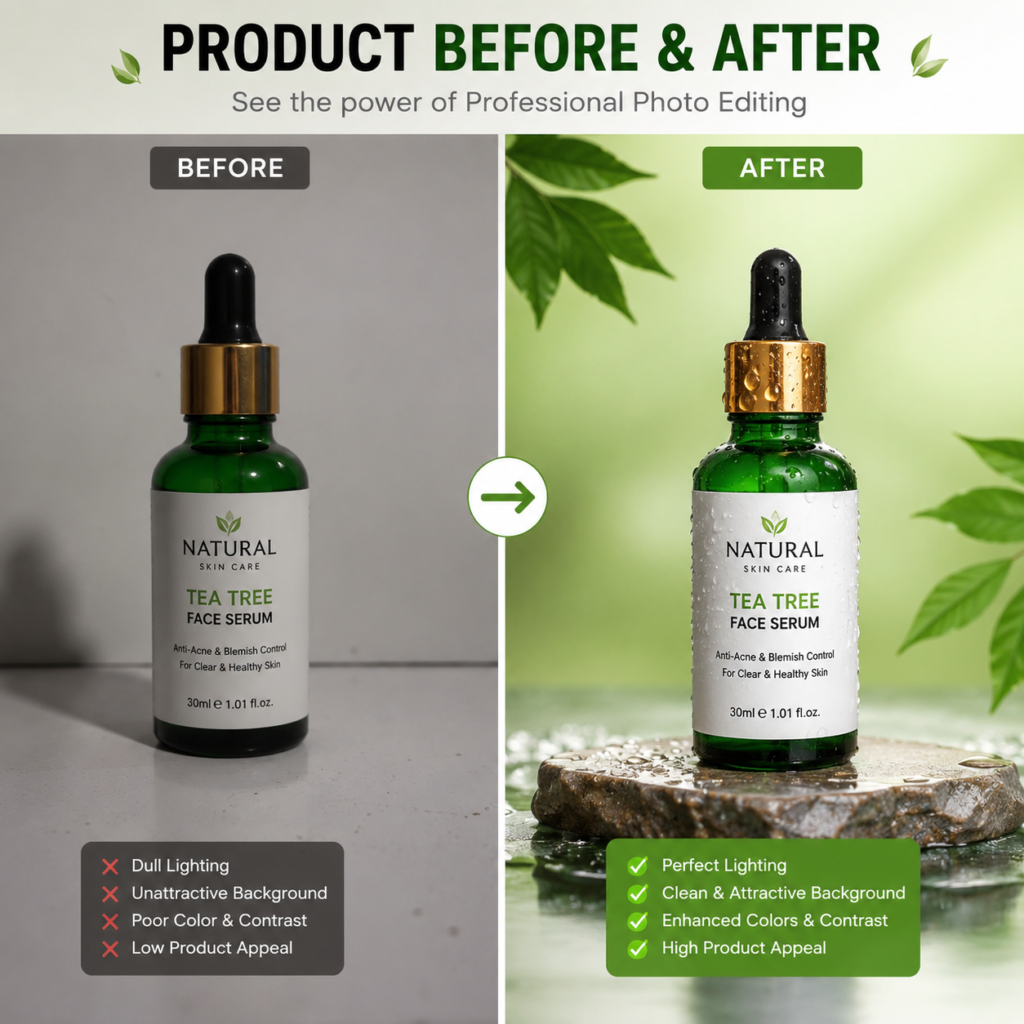
Why Ecommerce Image Editing Is No Longer Optional
A few shifts happening across the industry in 2026 explain why more US and European brands are investing in professional editing rather than doing it in-house:
- Marketplace compliance is stricter than ever. Amazon, Walmart, and similar platforms enforce detailed image guidelines (background color, sizing, watermark restrictions, etc.), and getting these wrong can lead to listing suppression or reduced visibility a costly mistake that’s entirely preventable with professional editing.
- Product catalogs are scaling faster than internal teams can keep up. Brands increasingly need not just a single hero shot, but a full system of images main listing photos, lifestyle shots, detail crops, and platform-specific variants all while keeping the product identity consistent across every version.
- AI-assisted workflows are speeding up production, but they still depend on a clean, well-prepared source image. Dust, poor cropping, color cast, or a distracting background all need to be fixed before an image is usable across ads, marketplaces, and product pages — which is exactly the kind of cleanup a professional editing company specializes in.
How to Choose a Photo Editing Company or Image Editing Company (US-Focused)
If you’re comparing vendors, here’s what actually matters:
- Turnaround time and scalability. Can they realistically handle a 50-image batch this week and a 5,000-image catalog next quarter?
- Marketplace-specific expertise. A company that regularly edits for Amazon, Shopify, and Etsy will already understand each platform’s technical requirements — saving you from listing rejections.
- Sample-based trials. Any credible ecommerce image editing company should be willing to edit a handful of your actual product photos before you commit to a bulk order.
- Clear revision policy. Look for unlimited or clearly defined revision rounds, especially for color-critical products like apparel, cosmetics, and jewelry.
- Data security. If you’re sending unreleased product photos or pre-launch samples, confirm how the company handles file storage and confidentiality.
- Transparent, per-image pricing. Reputable providers price per image or per batch with clear tiers — vague “custom quote only” pricing is often a red flag for inconsistent quality.
Final Thoughts
Whether you need a single drop shadow service for a small product line or a full-scale ecommerce image editing partnership to support thousands of SKUs, the underlying goal is the same: make every product photo look accurate, consistent, and trustworthy enough to convert a browser into a buyer. In a market where shoppers zoom, compare, and screenshot before they purchase, that level of visual polish isn’t a luxury — it’s table stakes.
If you’re evaluating photo editing companies or an image editing company for your US or European store, start small: send a test batch, check consistency across the set, and confirm they understand your specific marketplace’s image requirements before scaling up.